
How Play & Performance Help Children Find Their Voice, Make Bold Friends, and Step Forward with Confidence
By EmitMinds Team · June 05, 2026 · 8 min read
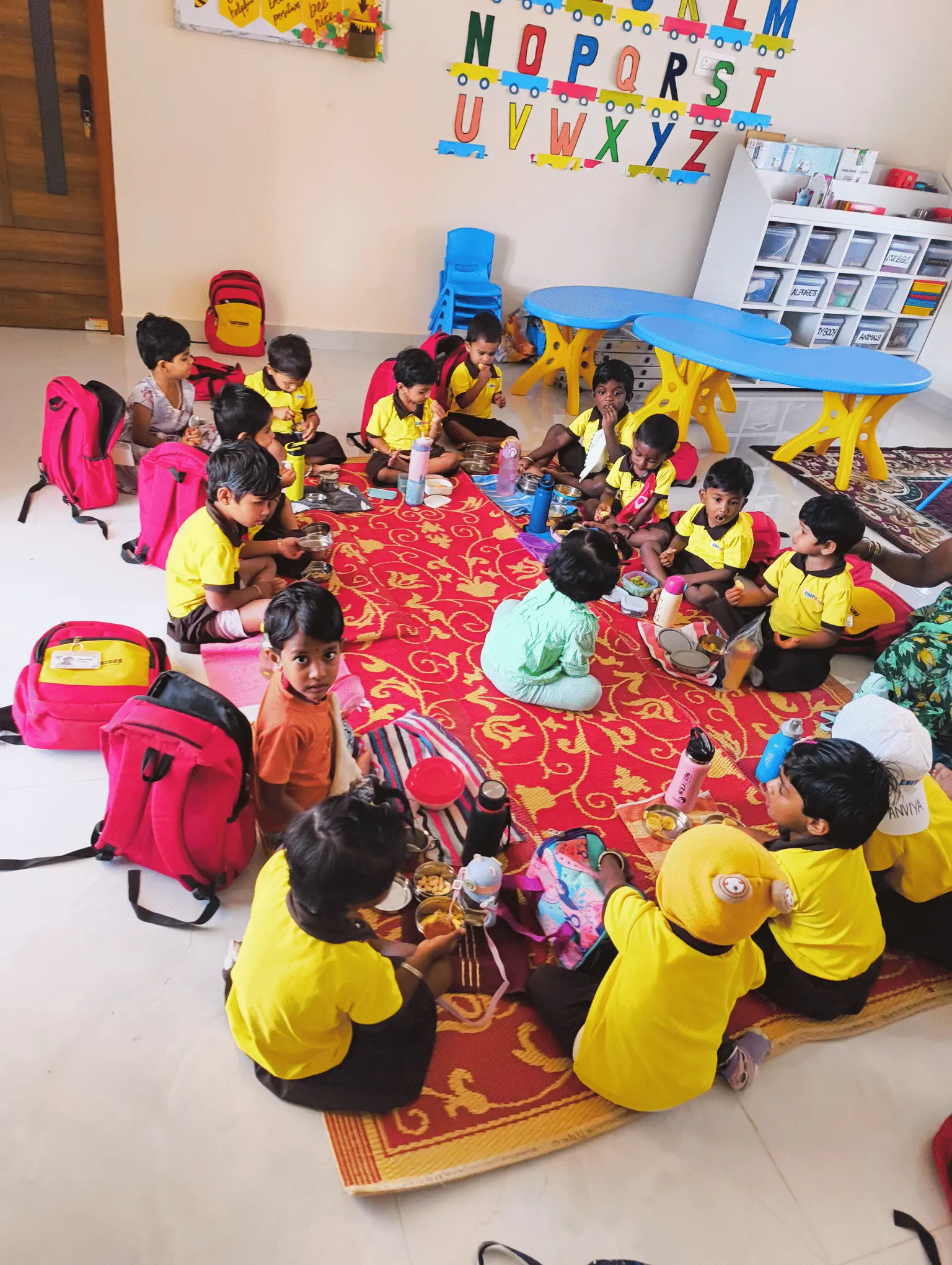
If you've noticed your child going quiet in groups, hesitating to speak up, or shying away from new friends — you're not alone. Many parents of toddlers and preschoolers notice these patterns and wonder: Is this normal? Will it change? What, if anything, can I do to gently support them?
This article doesn't offer medical advice, and we're not suggesting play activities can replace a qualified speech therapist or child psychologist when one is needed. What we do want to share is something many early childhood educators observe regularly: a joyful, expressive, performance-rich environment can create meaningful space for children to grow at their own pace.
"Play is the language of children. When we give them a stage — even a small one —
many of them surprise everyone, including themselves."
— Early childhood
educator perspective
What Do We Mean by "Interactive Performances"?
We're not talking about formal stage productions. In early childhood, "interactive performances" simply means activities where children express themselves in front of others — in low-pressure, joyful ways. This includes:
- Storytelling circles where each child narrates a small part of a story
- Drama and role-play sessions — pretending to be a shopkeeper, a doctor, or a superhero
- Puppet shows where a shy child can speak through a character
- Song and movement activities with group participation
- Show & Tell moments, mini "news reader" activities, or simple poem recitation
- Group dances and creative movement performances
These are common elements in many theme-based early childhood curricula, and children typically find them genuinely fun — not stressful.
Children and Communication: What Parents Often Notice
It's quite common for children between ages 2 and 5 to go through phases where communication feels uneven. Some children:
- Talk freely at home but go quiet in group settings
- Seem to understand everything but prefer not to respond verbally
- Struggle with particular sounds or pronunciation compared to peers
- Find it hard to initiate conversations with unfamiliar children
- Become visibly nervous when asked to speak in front of a group
These patterns are incredibly common and often resolve naturally with time. When children are gently encouraged to express themselves in safe, playful ways — many families report observing a gradual shift in how freely their children communicate over weeks and months.
A note for parents: If you have consistent concerns about your child's speech, language, or social development, please do speak with your paediatrician or a qualified speech-language pathologist. Early professional support, when needed, makes a significant difference — and there is no substitute for it.
Why Expressive Play May Support Communication Development
Developmental educators and researchers have long noted a relationship between expressive play and children's communication growth. Here's what many observe:
1. It Makes Speaking Feel Safe
When a child speaks "as a character" in a puppet show or role-play, the pressure of speaking "as themselves" dissolves. This low-stakes form of verbal expression gives hesitant speakers a chance to practise articulation, sentence construction, and vocabulary — all while having fun. Over time, the confidence built in character may carry over into everyday speech.
2. Repetition Through Story and Song
Storytelling and group songs naturally involve repeating words, phrases, and sounds. For children building their vocabulary or working through pronunciation, this playful repetition provides valuable, non-pressured practice. Children often don't even realise they're "practising" — they're just enjoying the activity.
3. Social Mirroring
In group performances and drama activities, children observe each other — how peers use gestures, tone, expressions, and words. This social mirroring is a natural and powerful way children learn how communication "works" in real interaction. A quiet child watching an enthusiastic peer may absorb far more than any direct instruction could provide.
4. The Audience Effect — In a Good Way
When a child successfully speaks or performs in front of even a small group and receives a warm response, something shifts. That moment of being heard and appreciated can be genuinely formative. Many parents share that after a school show or group storytelling event, their child speaks with noticeably more ease for days afterward.
5. Building Social Ease Naturally
Group performances require children to cooperate, take turns, wait for cues, and support each other — all core social skills. Drama naturally builds empathy, perspective-taking, and comfort with eye contact. Children who initially hover at the edge of a group often find their way in through shared activity — a puppet, a prop, a song they recognise.
What "Bold Social Skills" Look Like at Preschool Age
For a preschooler, social boldness might look like:
- Approaching a new child and saying "Can I play too?"
- Raising a hand to share an idea in circle time
- Standing up during a song even when not sure of all the words
- Choosing a role in dramatic play rather than watching from the side
- Making eye contact when greeted by a teacher or visitor
These small acts of social courage are enormous at this developmental stage — and they tend to grow gradually, naturally, with consistent, supportive group experiences.
Signs That Expressive Activities May Be Helping
Parents often ask: "How will I know if it's working?" Here are some gentle signs to watch for:
- They begin re-enacting characters or stories from school at home
- They talk about "what happened at school" with more detail and animation
- They ask to "do the show again" or request certain songs
- They initiate conversations about characters or stories with family
- They seem noticeably more at ease when speaking with familiar adults or peers
- They volunteer for activities rather than needing to be prompted
These signs won't appear overnight, and every child's timeline is different. Some children blossom in weeks; others take an entire school year to warm up fully — and both are completely normal.
How Our Thematic Curriculum Creates These Opportunities
At EmitMinds, our thematic curriculum naturally weaves expressive and performance-based activities into everyday learning. Through our Language & Literature, Creative Arts, and Social & Emotional curriculum strands, children encounter:
- Regular storytelling sessions with peer participation
- Drama and role-play as part of thematic exploration
- Music, movement, and group performance activities
- Show & Tell, poem recitation, and group presentations
- Seasonal performances where families are invited to witness growth
None of these are designed to "treat" any particular challenge — they are simply part of what a rich, joyful early childhood experience looks like. And for many children, that richness turns out to be exactly what they needed.
Over time, consistent engagement with expressive activities — storytelling, drama, group song, and interactive performances — may gradually support children who are working through communication ease, building social comfort, or simply finding their voice in group settings. Every child's journey is uniquely their own.
A Word for Parents Who Are Wondering
If you're reading this because your child is quieter than their peers, or because you've noticed some patterns in how they communicate — firstly, you're paying attention, and that matters enormously. Here's what we'd gently suggest:
- Trust the process. Many children who seem hesitant in group settings at age 3 are completely at ease by age 5 — with the right environment and patience.
- Choose environments that allow expression. Preschools that incorporate storytelling, drama, song, and playful performance tend to be rich developmental environments for all children.
- Don't compare timelines. Social confidence and communication fluency develop at very individual paces. Your child is on their own path.
- Seek professional guidance when in doubt. If your concerns are persistent or specific, a paediatrician or speech-language professional can give you expert guidance that no article can replace.
- Celebrate small wins. The first time your child raises their hand in class, chooses a role in drama, or retells a story at dinner — those moments matter. Acknowledge them warmly.
Final Thoughts
A child finding their voice is one of the most beautiful things to witness. It rarely happens in one dramatic moment — it unfolds gradually, through hundreds of small, brave acts: a puppet raised a little higher, a line spoken a little louder, a friend made a little more easily.
Play — especially expressive, performance-rich play — creates the conditions for those moments. It doesn't force them. It invites them. And children, when given a joyful, safe, and supportive space, almost always accept the invitation — in their own time.